
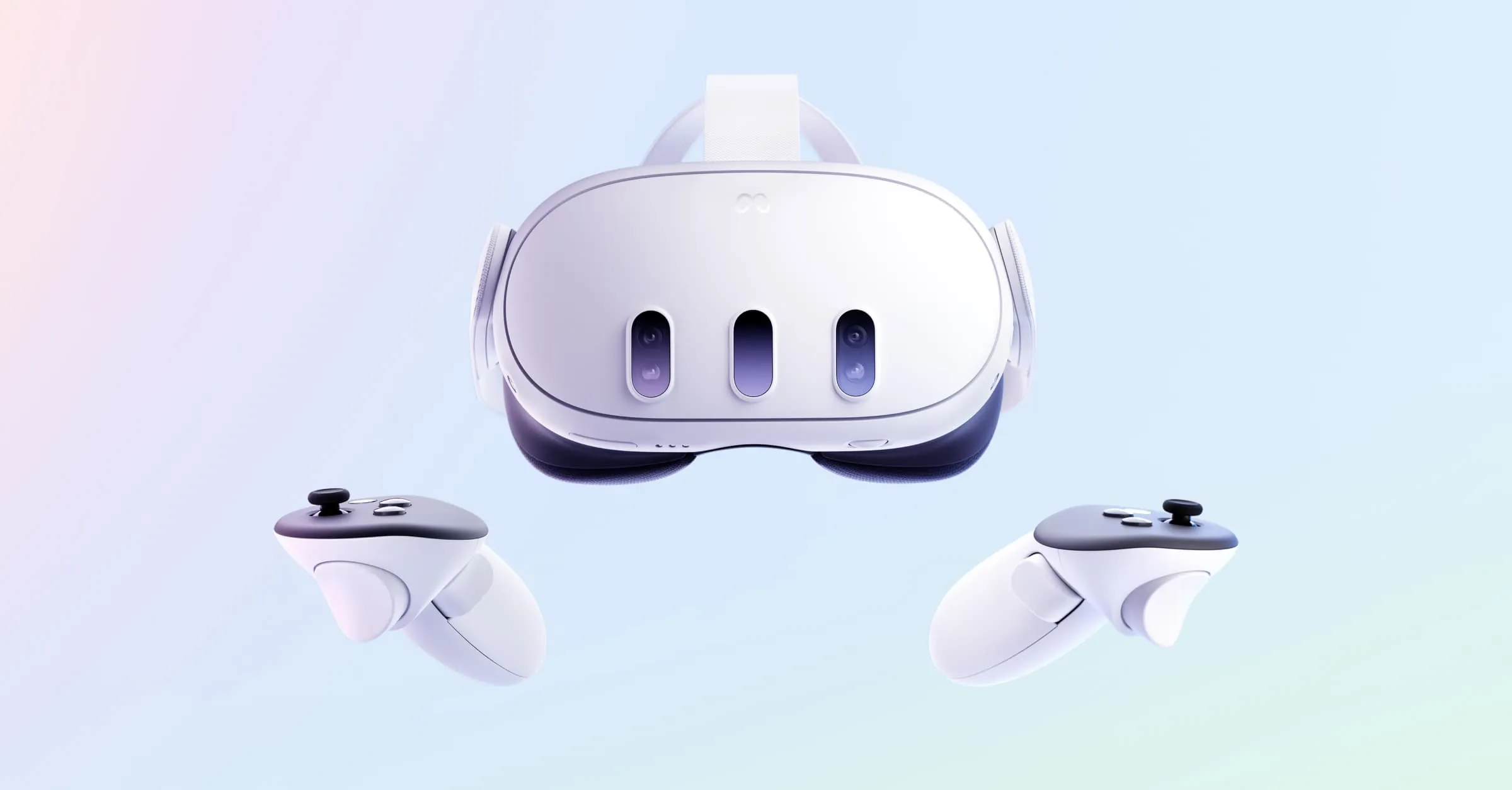
The Pancake Revolution: Visual Clarity as the Primary UX
The defining achievement of the Quest 3 remains its pancake optics. By replacing the bulky Fresnel lenses of previous generations, Meta has provided a "sweet spot" that covers almost the entire field of view, effectively eliminating the blur and god-rays that once plagued VR. In the 2026 landscape, this clarity is the foundation for its most important software shift: "Lying Down Mode" and high-fidelity media consumption.
The user experience has evolved to favor comfort and versatility. With the latest software updates, the Quest 3 has become a premier device for the "media lounger." Whether you are pinning a 100-inch virtual cinema screen to your ceiling while lying in bed or multitasking with floating browser windows in your living room via the much-improved color passthrough, the device feels less like a helmet and more like a set of smart goggles. It is a system that rewards the user with "invisible" depth sensing; the room is scanned automatically, furniture is detected in real-time, and virtual objects now cast realistic shadows on your physical carpet, making the "Mixed Reality" promise feel finally tangible.
The Standalone Fortress: Navigating the Snapdragon XR2 Gen 2 Era
Technically, the Quest 3 continues to punch above its weight class thanks to the Snapdragon XR2 Gen 2 chipset. In 2026, this silicon allows for "Quest 3 Enhanced" versions of blockbuster titles that rival entry-level PCVR graphics. While the newer Quest 3S provides a budget entry point with the same processor, the Quest 3 maintains its premium status through its higher-resolution displays (2064 x 2208 per eye) and infinitely adjustable IPD wheel, which ensures a perfect optical fit for every face shape.
The platform's true strength, however, is its maturity. Meta’s Horizon Store has become the most robust library in the industry, far outstripping rivals like Pico or the nascent Steam Frame. From professional fitness apps that track your actual weights via the Passthrough Camera API to collaborative workrooms that support codec avatars with realistic eye contact, the Quest 3 is the only device that balances a "hardcore" gaming library with legitimate real-world utility. For the 2026 consumer, it represents the "safe bet"—a device with a massive modding scene, a reliable update cycle, and a social layer that actually feels inhabited.
Value vs. Compromise
| Pros | Cons |
| Stunning pancake lenses offer industry-leading edge-to-edge clarity | Default fabric strap is notoriously uncomfortable for long sessions |
| Best-in-class standalone software library and MR ecosystem | Battery life remains a bottleneck, averaging only 2 hours per charge |
| High-fidelity color passthrough enables true mixed-reality use cases | Passthrough graininess still trails significantly behind Vision Pro |
| "Lying Down Mode" and advanced hand tracking for relaxed usage | 128GB base storage is increasingly tight for modern 2026 game sizes |
The Meta Quest 3 remains the premier choice for anyone who wants to experience the future of computing without the "early adopter tax" of a $3,000 headset. It is a masterclass in compromise, proving that by focusing on the right optics and a robust app store, you can build a virtual world that people actually want to live in.