
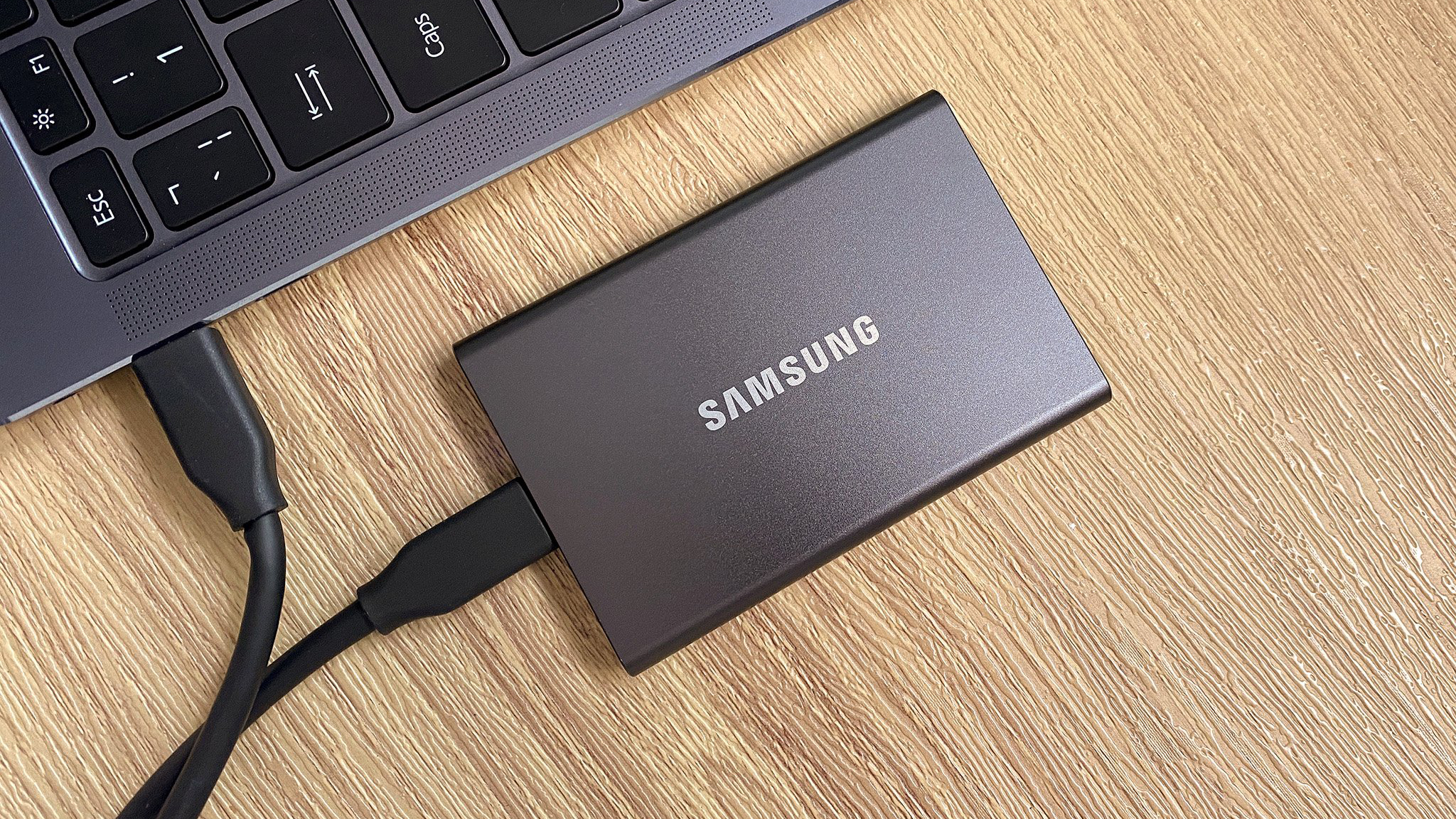
The tactile reality of seamless data mobility
The genius of the Samsung T7 lies in its refusal to be noticed. While legacy external drives announced their presence with the rhythmic clicking of spinning platters and the constant threat of mechanical failure, the T7 is a silent, aluminum sliver of performance. For the creative professional working in 2026, the user experience is defined by the absence of friction. Weighing barely 58 grams, it fits into a coin pocket, yet it handles 4K video scrubs with the fluidity of an internal NVMe drive. Samsung’s decision to prioritize sustained thermal management over flashy, unsustainable peak speeds is its greatest gift to the user. It doesn't just promise 1,050 MB/s; it delivers a consistent throughput that respects your time during a three-hour export session.
Bridging the gap: Ecosystem intelligence and the move toward automation
Hardware is increasingly judged by how well it plays with the software layer. In today’s hyper-connected landscape, the T7 serves as more than a passive vault; it is a high-speed node in an increasingly automated workflow. Through its integration with modern backup APIs and AI-driven file management tools, the T7 has evolved. We are seeing users leverage these drives as "scratch disks" for real-time AI upscaling and local LLM model hosting, where low-latency access is the difference between a tool that feels alive and one that feels laggy. The T7’s broad compatibility across USB-C ecosystems—from iPads to high-end cinema cameras—means it acts as a universal translator for your data, allowing for a collaborative environment where files move as fast as ideas.
The Scorecard
| Strengths | Weaknesses |
| Exceptional thermal throttling management during long transfers | Lacks the IP65 ruggedization found in the T7 Shield variant |
| Elegant, minimalist design that survives the bottom of a backpack | Included cables feel stiff and a bit dated compared to the drive |
| Consistent read/write performance across diverse file types | No built-in cable management or attachment loop |
| Highly reliable AES 256-bit hardware encryption | The software utility is functional but feels aesthetically stuck in 2020 |
The Samsung T7 isn't trying to reinvent the wheel; it’s just making sure the wheel spins faster and more reliably than anyone else's. It remains the most pragmatic choice for anyone who values their data as much as their time.