
The Modular Manifesto: Engineering for Eternity
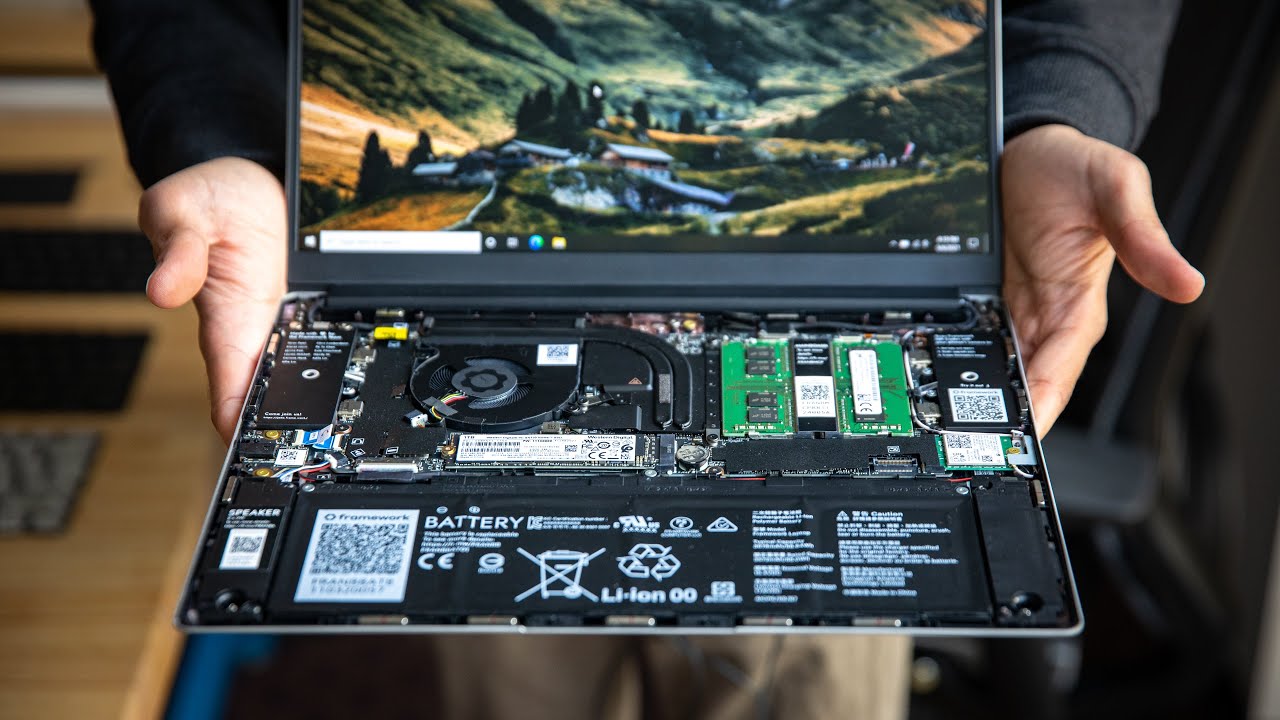
The brilliance of the Framework Laptop—available in both the 13-inch ultraportable and the 16-inch powerhouse formats—lies in its radical transparency. By early 2026, the Expansion Card system has matured into a universal standard for I/O, allowing users to hot-swap HDMI, DisplayPort, MicroSD, or even high-speed Ethernet ports in seconds. This isn't just a gimmick; it is a fundamental shift in user experience that eliminates the "dongle hell" popularized by thinner, sealed competitors.
Every component, from the keyboard and battery to the display hinge and webcam, is labeled with a QR code that links directly to official repair guides. This "bottom-up" design philosophy creates a unique sense of confidence. When you buy a Framework, you aren't just buying a snapshot of current technology; you are buying a chassis designed to outlast its internal silicon. The 2026 iterations have refined the "fit and finish" issues of early models, offering a sturdy aluminum build that feels as premium as any enterprise-grade workstation while remaining entirely user-serviceable.
Circular Silicon: The Agentic Power of Upgradability
As we move deeper into 2026, Framework has fulfilled its promise of a completely upgradable ecosystem. The introduction of the latest AMD Ryzen AI 300 and Intel Core Ultra 300 (Panther Lake) mainboards allows owners of the original 2021 chassis to leapfrog generations of performance without discarding a single ounce of aluminum or plastic. This "Mainboard-as-a-Module" strategy is the ultimate expression of sustainable computing, effectively decoupling the pace of chip innovation from the lifespan of the laptop.
The Framework Laptop 16 takes this further with its modular GPU bay. For the first time in mobile computing, the discrete graphics card—currently featuring options like the RTX 5070—can be swapped out as gaming and AI requirements evolve. Beyond hardware, Framework’s commitment to an "open ecosystem" has fostered a vibrant developer community that creates custom 3D-printed cases, allowing replaced mainboards to live second lives as standalone desktop PCs or home servers. In an age where AI-native laptops risk becoming obsolete the moment a new NPU is released, Framework’s modularity ensures that your hardware is always an active choice, not a permanent limitation.
The Sustainability Ledger: Control vs. Convenience
The Framework Laptop remains the premier choice for the professional who values longevity and liberty over the sleek trap of non-repairable hardware. It is a masterclass in responsible engineering, proving that the most advanced feature a laptop can have is the ability to be taken apart.