
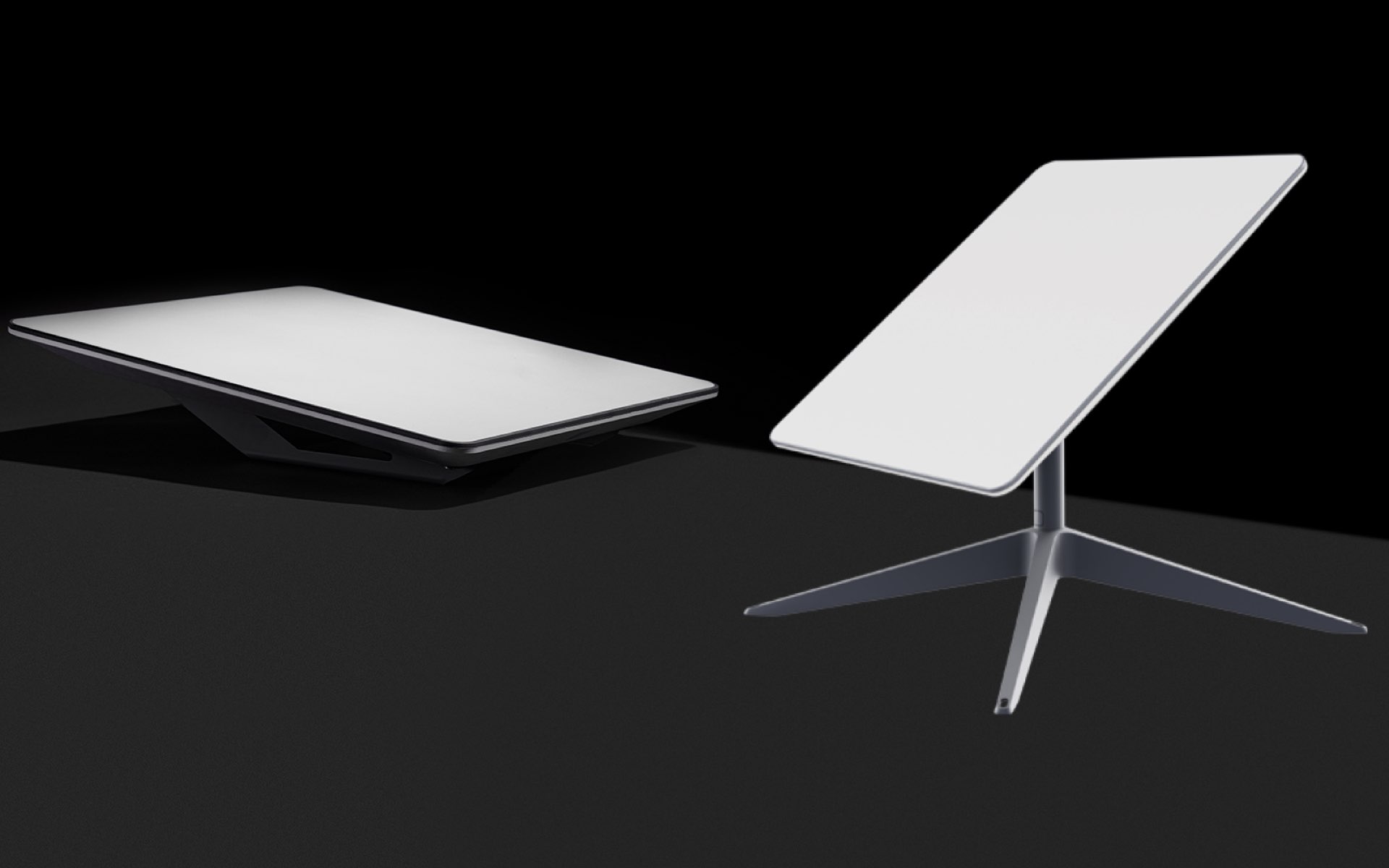
The Gigabit Horizon: Hardware Resilience and the V3 Leap
The primary achievement of the 2026 Starlink ecosystem—centered around the new Performance (Gen 3) and Mini terminals—is the transition to gigabit-class potential. While terrestrial fiber remains locked behind civil engineering hurdles, the Performance kit, with its rugged aluminum enclosure and IP69K rating, has been engineered to withstand 270 kph winds and extreme temperatures. It isn't just a dish; it’s a hardened gateway designed for 10-year survivability in environments that would destroy consumer electronics.
The user experience has been radically simplified by software-assisted manual orienting, which eliminates the mechanical failure points of older motorized models. For the mobile professional, the Starlink Mini has become the breakout star, offering 150+ Mbps speeds in a backpack-friendly 1.1kg form factor. With a power draw as low as 30W, it allows digital nomads to maintain a professional Zoom presence from a 12V car adapter. The system succeeds because it makes the complexity of low-Earth orbit (LEO) physics feel like a standard Wi-Fi connection, turning the sky into a transparent, high-speed backplane.
Intelligence in Orbit: Agentic Networks and Space-Based Compute
Beyond raw speed, Starlink’s 2026 technical depth is defined by its shift toward "Orbital AI." With the launch of the Starlink V3 satellites via Starship, SpaceX has introduced over 60 Tbps of new network capacity, reducing latency to a sub-26ms median that rivals local cable. This isn't just about more bandwidth; it’s about a smarter network. The 2026 terminals now leverage AI-driven "Predictive Handoffs," utilizing on-board processing to anticipate satellite visibility and atmospheric interference before a single packet is lost.
Furthermore, Starlink is reportedly exploring the deployment of space-based data centers, where AI inference workloads can bypass terrestrial power and land constraints. This "Agentic" network management means your terminal is no longer just a passive receiver; it is a node in a self-healing, laser-linked mesh that can reroute traffic around ground-level outages or solar events in real-time. By integrating with the Model Context Protocol (MCP), Starlink’s 2026 firmware allows enterprises to manage global fleets of terminals as a single, programmable entity, effectively turning the planet into one massive, high-speed local area network.
Freedom vs. Friction
Starlink 2026 is the premier choice for anyone who refuses to let geography dictate their productivity. It is a masterclass in vertical integration, proving that the best way to fix the internet on Earth is to build it in the stars.